Electoral stakeholders yesterday took Malawi Electoral Commission (MEC) to task to address security and on-off internet connectivity ahead of the September 16 General Election.
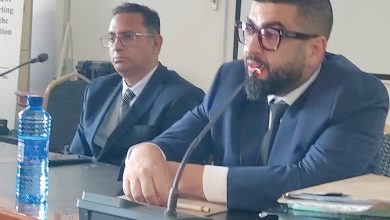
The sentiments were expressed at the Bingu International Convention Centre (Bicc) in Lilongwe where MEC chairperson Annabel Mtalimanja made a bow at the final National Elections Consultative Forum (Necof) meeting to explain the commission’s preparedness.
But she stirred a hornet’s nest with mentions of intermittent internet connectivity that slowed the transmission of test results during simulations held last month in 73 constituencies nationwide.

In response to the concerns, the High Court judge challenged internet providers, namely TNM plc and Airtel Malawi plc to eliminate the internet challenges to facilitate smooth and secure electronic transfer of results from constituencies to the national tally centre in Lilongwe.
“We need reliable internet to avert the delays and hiccups caused by intermittent connectivity during the dry run,” she said.
MEC will use a hybrid system that will blend signed forms and electronic transmission to relay the results to the national tally centre at Bicc.
But the stakeholders demanded to know the steps MEC has taken to close the connectivity gaps exposed during the dry run.
In his contribution, Senior Chief Tengani of Nsanje District said: “What strategies have you put in place to close the internet gaps considering that many areas, especially rural settings where most voters live, have no internet connectivity and people still have to climb trees or anthills to access spills of phone signals?”
Chipping in, ICT Association of Malawi representative Andrew Kamwendo asked MEC to establish a backup and cybersecurity plan to avert disruptions caused by unstable network, hackers and congestion which could compromise the functioning of the election management devices on the polling day.
The growing concerns expose unreliable connectivity in the country where internet penetration is just over a third of the population at about 37 percent, according to the Malawi Communications Regulatory Authority.
The figures fall below the 44 percent internet reach across southern Africa.
Mtalimanja said internet reach was one of the yardsticks in the establishment of tally centres in the 229 constituencies.
On the polling day, about 7.2 million registered voters will queue in 15 148 polling stations in lines of not less than 600 people each to elect the President, 228 parliamentarians and 503 ward councillors.
The 229th parliamentarian, Lawrence Chaziya of Lilongwe Chilobwe Constituency, won his seat unopposed as did Nyang’amiro Ward councillor Hilton Masache of the same area. MEC has suspended councillorship elections in five wards following the deaths of candidates, including Abraham Nyondo who died yesterday morning in Chirunga Ward and Zomba City North.
Activists and elections stakeholders commended MEC for sustained transparency and accountability, but urged its workforce and security agents to remain vigilant for peaceful elections everyone can trust.
Civil Society Elections Integrity Forum chairperson Benedicto Kondowe said MEC has to date done everything possible to deliver peaceful, free and fair elections, but urged the electoral body and security agents to remain neutral arbitrators to level the playing field for credible elections.
“As referees, they should desist from taking sides. Doing so could derail the process and erode public trust and peace,” he said.
Youth and Society executive director Charles Kajoloweka hailed MEC for transparency and accountability, but rated security agents’ crackdown on pockets of violence as “suboptimal”.
“MEC has laid everything bare. It has done well to promote public participation at every step of the electoral process. However, the handling of political violence by the police and other security agents leaves a lot to be desired,” he said.
Concurring, Human Rights Defenders Coalition (HRDC) chairperson Gift Trapence asked MEC to seriously address the rising concerns about hiccups in security and electronic transmission of results.
HRDC led serial mass protests against the irregularities that compelled the courts to nullify the 2019 Presidential Election.
The messy election, retaken on June 20 as ordered by the courts, exposed the hidden cost of neglected irregularities that can ruin the multi-billion kwacha democratic process, sparking civil unrest.
Speaking 13 days to the polling day, political scholar Augustine Magolowondo said the country has entered “a must-watch phase” and all stakeholders should keep their eyes on safeguarding the forthcoming vote.
Democratic Progressive Party director of elections Jean Namathanga, a former MEC commissioner, asked the electoral body to flood conflict hotspots with law enforcers for peaceful polls.
However, she said the security plan should be transparent and shared with political parties.
In response, Mtalimanja said MEC and the security task force have a robust strategy, but referred related questions to Malawi Defence Force (MDF) Commander General Valentino Phiri who was in attendance
The MDF chief said the soldiers, together with police, immigration and prisons officers, stand ready to protect voters, voting material, elections staff and peace during the election.
Said Phiri: “Contrary to the perception that security agents protect the party in power, our soldiers are professionally trained to protect the nation from external enemies and to maintain internal peace when the police is overwhelmed, including during emergencies and national events.”
MEC has recruited 121 044 temporary workers to manage these elections, with the dispatch of staff, ballots and electoral materials to all polling centres expected to be conducted from Monday next week.